Amboseli National Park
Tucked up against Kenya’s Southern border with Tanzania, Amboseli National Park is one of the most accessible and popular wildlife destinations in Kenya. The park is a just a four hour journey from Nairobi, its geography is its charm. Sitting underneath Africa’s highest mountain – Mount Kilimanjaro, the park receives little rainfall yet is home to a network of swamps and marshes sustained by underground mountain run-off that attracts a wealth of birdlife.
Amboseli is famed for its most iconic vista –the snowcapped peak of Kilimanjaro and large herds of elephants, seeing herds of elephants slowly past the snow-capped peak of Kilimanjaro is the quintessential image of East Africa.

Amboseli National Park is part of the wider Amboseli ecosystem, this dusty savannah remains largely unfenced and wildlife disperse during the wet season into the surrounding lands, some of which are now Maasai-owned conservancies where it is possible to enjoy intimate walking safaris and night game drives.
Amboseli National Park is one of the best places in the world to see wild African elephants, with around 1,500 packed into just 392 km2.
The name Amboseli comes from the Maasai word meaning salty dust – and seeing herds of gentle giants covered in this white, salty mud after an afternoon of wallowing in the swamps is a happily common sight here.
Amboseli Elephants
Around 1,500 elephants call Amboseli home, a healthy population thriving in 392 km2 that has bypassed much of the poaching crisis affecting other areas of East Africa – thanks in the main to the Amboseli Elephant Research Project, Africa’s longest running study of wild elephants, and the community –owned conservancies which surround the park.
On Amboseli Safari expect to see herds of up to 100 individuals of all ages, from tiny babies to 60 year old matriarchs and huge tuskers, wander past during game drives.
Amboseli Wildlife
In addition to large herds of elephants, Amboseli National Park is also home to more than 50 mammal species, including lion and cheetah, leopard, hartebeests, gazelles, lesser kudu, plus herds of zebras, wildebeests and their predators
Lake Amboseli
The vast lake which the park gets its name from is mostly parched and dry – although come the rainy season it can fill with a shallow of water, no more than 2ft deep. The result is spectacular – a vast mirror reflecting the sky and savannah. In the dry season expect strange mirages as the heat shimmers off the dry, salty surface.
The Observation Hills
This pyramid-shaped hill rising out of Amboseli’s plains offers a panoramic view across the park to Kilimanjaro in the south, or east to the swamps. You are unlikely to encounter wildlife here – hence it is one of the only places you get out of your vehicle and stretch your legs, seeing elephants and hippos in a distance puts their size, and the sheer scale of the landscape, in context.
Selenkay Conservation Area
The Sekenkay Conservation Area adjoining the Amboseli National Park is a pioneer of community conservation in Kenya. Traditional Maasai landowners lease out their lands and profit from visitors’ stays. As a result elephants and other wildlife, originally aggressively chased off the farmlands, now range far into the conservancy-where they can be seen by vehicle or on foot with a Maasai guide. Only 20 guests stay at a time in the conservancy’s remote camp for unique, intimate and cultural safari experiences.
Mount Kilimanjaro View
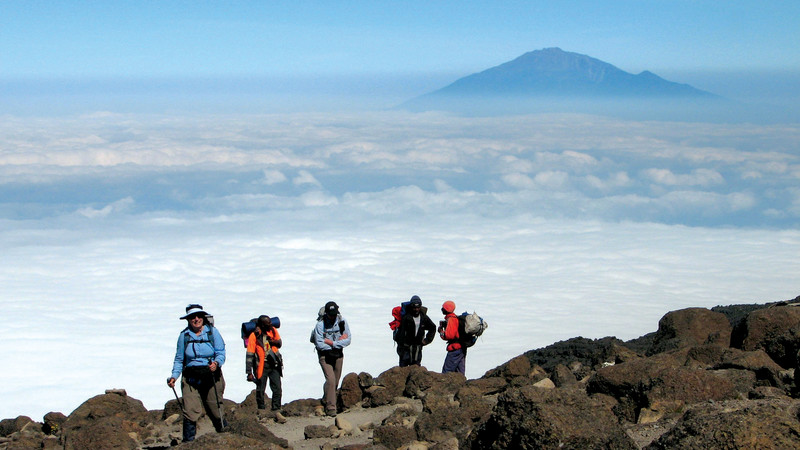
To catch the iconic view of Kilimanjaro towering over the Amboseli Plains, you will need an early start – too late in the day and cloud cover obscures the snow-covered peak. And even when it is clear the heat haze and dust can make the peak indistinct at best. You will have to be doubly lucky to catch wildlife in front of it, so if that photo is paramount you will need to be flexible.
Birding
The classic Kilimanjaro view is what makes Amboseli so unique. While the park is in its rain shadow, swamps formed by water flowing underground from the mountain are sustained year-round and provide habitats for a wealth of bird species. Over 420 of them, in fact, including the prehistoric and somewhat ridiculous looking shoebill. During the wet seasons, clouds of pink flamingos settle here turning the swamps a hazy, squawking, pink.
Other animals found in Amboseli include African swamphen, Common redshank, Dickinson’s kestrel, Eurasian thick-knee, Greater flamingo, Hartlaub’s bustard, Lesser flamingo, Long-toed lapwing, Pangani longclaw, Rufous chatterer, Rufous-bellied heron, Spike-heeled lark, Steel-blue whydah, Taveta golden weaver, Von der Decken’s hornbill, White-bellied go-away bird and Yellow-necked spurfowl among others
Discover the Maasai Culture
The Maasai people – self declared the owners of all cattle in the world, are one of the most African tribes, clad in their typical red clothes, adorned with amazing bead jewellery and naturally dyed, waist-length red braids, populate the area. For years the Maaasai have grazed their herds and lived in temporary homesteads, known as “Manyattas”. These small longish structures are built by the women from mud, cow dung and ash. The surrounding wall of thorny branches serves to protect the precious cows from indigenous predators. With the conflict between the ecosystem and its human inhabitants increasing, the Maasai have sadly been marginalized into community farms outside the park. still they can be admired in the full beauty serving as security staff for the lodges and when performing their sonorous, humming group songs, accompanied by their famous jump dance.
Best Time to Visit Amboseli National Park
The dry season from June to October is generally considered the best time to see wildlife in Amboseli, with little rain falling wildlife retreats to the swamps in the park where underground water from Kilimanjaro wells up permanently year-round. However, this is also peak season – as Kenya’s most national park (coming second after Masai Mara) you will need to book early to secure accommodation during these months.
