Arusha National Park
Arusha National Park is an amazing national park in Tanzania and one of the iconic wild places in East Africa. Located in Arusha, the park covers an area of 552 square kilometers, encompassing Mount Meru, a prominent volcanic cone with a spectacular crater at the top; lush highland forests covering the lower slopes of the volcano; and Momella Lakes.
Mount Meru and its crater, the Ngurdoto crater, are the most striking features in Arusha National Park. The volcanoes were formed between 1 and 3 million years ago as a result of volcanic eruptions. Mount Meru is also the second-highest mountain in Tanzania after Mount Kilimanjaro.
Arusha National Park is the most accessible national park in Tanzania and a perfect Tanzania wildlife destination for a one-day trip or as a first stopover on a long Tanzania safari, either to the Northern Tanzania Safari Circuit or the Southern Circuit.
Arusha National Park is located in northeastern Tanzania and is situated close to Arusha Town, just next to the Kenya border; from Arusha Town, it is a drive of 35 kilometers.
Arusha National Park lies on a 300-kilometer axis of Africa’s most famous national parks, such as Serengeti National Park, Ngorongoro Conservation Area and Kilimanjaro National Park; the park is also 58 kilometers from Moshi and 35 kilometers from Kilimanjaro International Airport (KIA).
History of Arusha National Park
Arusha National Park is the second oldest park in Tanzania, together with Lake Manyara National Park, established in 1960. The history of Arusha National Park goes back to 1876 when Count Teleki, a Hungarian, visited the Momella area. On his visit to the area, he commented on the vast number of hippos and black rhinos, which sadly no longer exist in the park.
In 1097, the Trappe family moved to Momella to farm using large areas as a cattle ranch; the elder Mrs. Trappe—the first woman to become a professional hunter in East Africa—voluntarily set aside a large part of the Momella estate for a game sanctuary.
Following the establishment of the park in 1960, the farm was incorporated into it. In 1960, the Ngurdoto Crater National Park was established and in 1967, the Mount Meru area was also added to the park.
The name of the park was changed to Arusha National Park; the name of the park was derived from the local Warusha people who used to live in the area.
WILDLIFE IN ARUSHA NATIONAL PARK
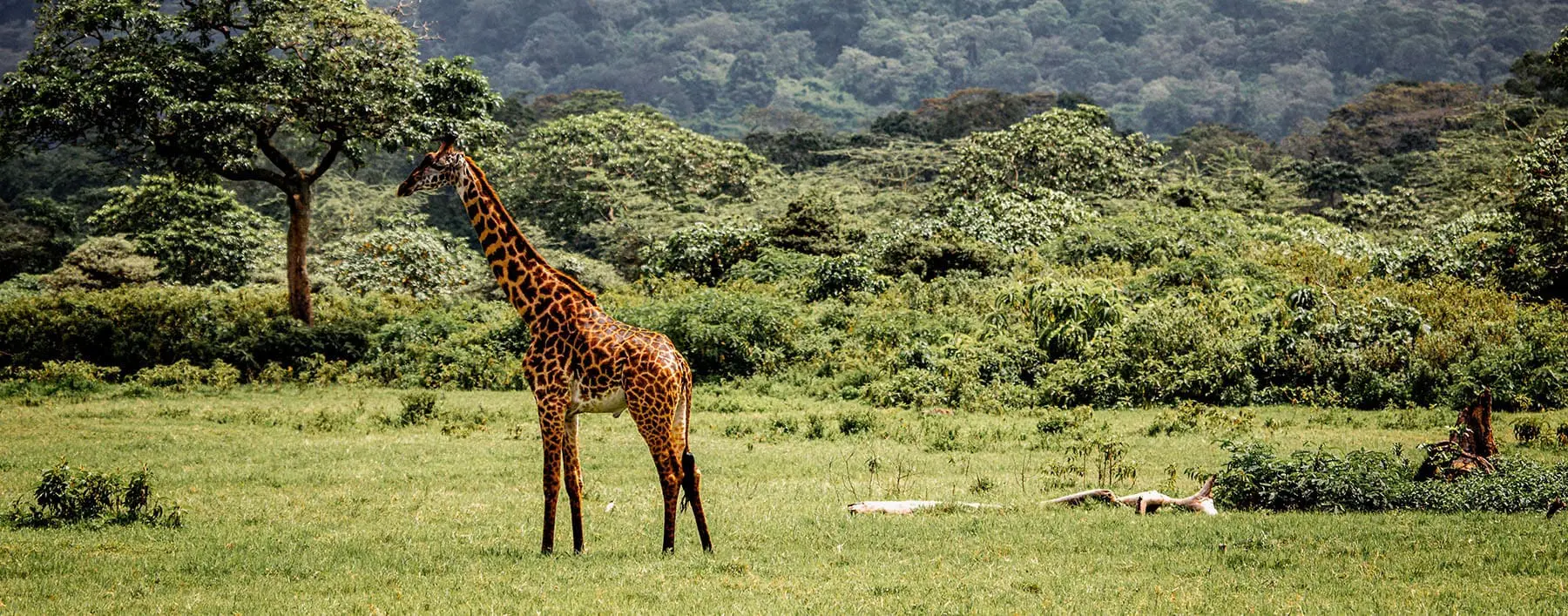
Arusha National Park is home to a number of animal species, including buffaloes, zebras, giraffes, hippos, warthogs, waterbucks, pairs of dik-diks, reedbucks, elephants, zebras, giraffes, red duikers, bush pigs, and black and white colobuses, among others.
BIRDLIFE IN ARUSHA NATIONAL PARK
Arusha National Park is home to more than 400 species recorded thriving in various areas of the park, including the Momella Lakes; these birds include raptors, forest birds, water birds savannah birds and flamingos flocking the shores of Momella Lakes.
Birds to see in the park include Narina trogons, bar-tailed trogons, augur buzzards, Verreaux’s eagles, flamingos, waterfowl, grey-crowned cranes, silver-cheeked hornbills, white-necked ravens, African fish eagles, Mangbettu sawings, southern carmine bee-eaters, Egyptian geese, spur-winged geese, red-billed teals, Cape teals, great crested grebes, Hartlaub’s turacos, bearded vultures, little grebes, African olive pigeons, peregrine falcons, red-fronted parrots, scaly francolins, southern pochards, golden eagles, lanner falcons, crowned eagles, Levaillant’s cuckoos, Jacobin cuckoos, yellow-billed storks, saddle-billed storks, African spoonbills, black-headed herons, black-winged stilts, African jacanas, pied avocets, red-billed oxpeckers, bronzy sunbirds, grey-headed bushshrikes, white-crested tilt, African paradise flycatchers, white-browed coucals, Hamerkops and pelicans, among others.
SAFARI ACTIVITIES IN ARUSHA NATIONAL PARK
Game Drives
A game drive is a classic Tanzanian safari experience to do in Arusha National Park. The park comprises trails running through Serengeti Ndogo, normally referred to as Little Serengeti, which is a small patch of open grassland situated just north of the Ngongongara gate.
From the pop-up roof or open windows of your vehicle, you will be able to see many animals thriving in the park, such as zebras, warthogs, elephants, buffaloes, giraffes, waterbucks, bushbucks, hippos, and dik-diks, among others.
Mount Meru Climbing
Climbing Mount Meru, the second tallest mountain in Tanzania, is an adventurous experience. Mount Meru is a spectacular volcanic cone with one of East Africa’s most scenic and rewarding climbs.
Mount Meru starts its steep rise from a circular base of approximately 20 kilometers across at 2000 meters; some of the walls of the crater of about 2500 meters have broken away, so half of the mountain is shaped like a giant horseshoe.
Climbing Mount Meru is only done on the Momella Route on the eastern side of the mountain. The route goes to the summit along the northern arm of the horseshoe crater and the whole climb can be done comfortably in four days.
Note: No treks are allowed to begin after 3 pm.
Bird Watching
Arusha National Park is a birder’s haven with over 400 bird species recorded, encompassing many habitats, including Momella Lake, which attracts large flocks of flamingos and other water birds, migratory bird species, forest bird species, among others.
Some of the birds to look out for while on a Tanzanian birdwatching safari include bar-tailed trogons, augur buzzards, Verreaux’s eagles, flamingos, waterfowl, grey-crowned cranes, silver-cheeked hornbills, white-necked ravens, African fish eagles, Mangbettu sawwings, southern carmine bee-eaters, Egyptian geese, spur-winged geese, red-billed teals, cape teals, great crested grebes, Hartlaub’s turacos, bearded vultures, little grebes, African olive pigeons, peregrine falcons, red-fronted parrots, scaly francolins, southern pochards, golden eagles, lanner falcons, crowned eagles, Levaillant’s cuckoos, Jacobin cuckoos, yellow-billed storks, saddle-billed storks, and African spoonbills, among others.
Walking Safaris
There are not many areas in Tanzania where walking safaris can be done to explore the wildlife-rich wilderness on foot; one of the perfect areas in the park to do walking safaris is Ujambo Wa Mbogo, “Buffalo Glade. “The area is dominated by marsh, bushes and streams, which serve as a feeding ground for buffaloes, giraffes and warthogs, which you will see during the Tanzania walking safari.
There are also trails that pass below Mount Meru and another following the Ngurdoto Crater rim. A walk to the Njeke viewpoint on the Meru Crater floor follows Stage 1 of the climb up Mount Meru, thus being an excellent day hike.
Canoeing
Canoeing in Arusha National Park is a scenic safari experience done on the beautiful Momella Lake situated in the heart of Arusha; from the canoe, you will get to witness various animals in their natural habitat.
A canoe safari takes 2-3 hours, commencing early in the morning at 07:30 or in the evening at 16:00. Some of the animals you will be able to see include hippos, giraffes, buffalo, bushbucks, and giraffes, among others.
Horseback riding
Horseback riding is a unique and eco-friendly way to explore Arusha National Park; on the back of a horse, you can explore the African bush and get a close encounter with wildlife. Horseback rides normally take 5-7 hours, passing through hidden trails. From a safe distance, you will be able to see animals including lions, leopards, elephants, buffaloes, and giraffes, among others.
HOW TO GET TO ARUSHA NATIONAL PARK
The main entrance to Arusha National Park is approximately 35 kilometers northeast of Arusha and it takes approximately 1 hour to drive from Kilimanjaro International Airport.
WHERE TO STAY IN ARUSHA NATIONAL PARK
There are several accommodation facilities in Arusha National Park categorized as luxury, midrange and budget.
- Ngurdoto Mountain Lodge
- The African Tulip
- Arusha Serena Hotel Resort & Spa
- Ngare Sero Mountain Lodge
- Momella Wildlife Lodge
- Mount Meru Game Lodge
- Hatari Lodge
- Itikoni Seasonal Camp