Tarangire National Park
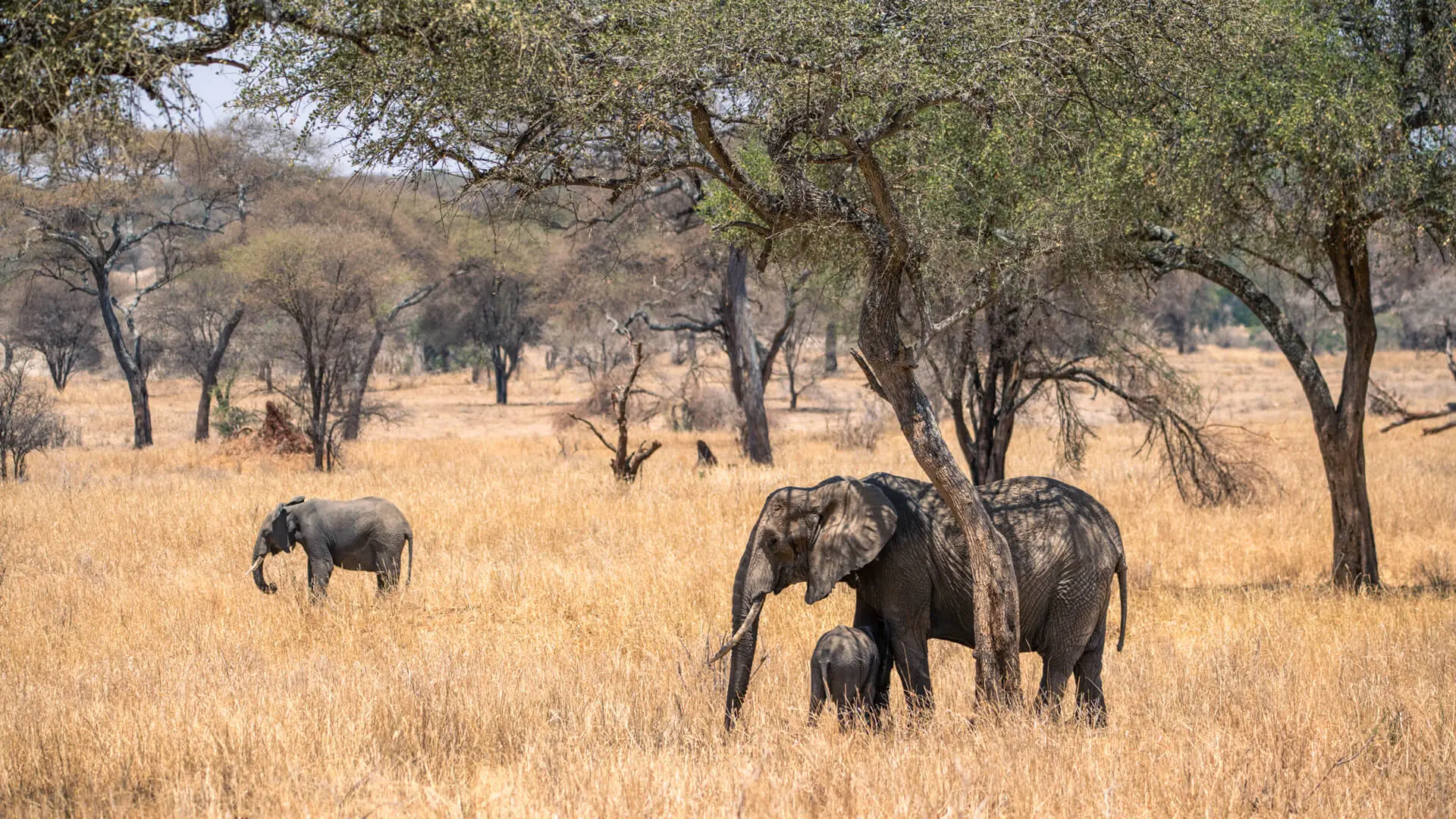
Rivalling Serengeti National Park in the great number and diversity of its wildlife, Tarangire National Park is one of the lesser-known game parks in Tanzania and a great destination for travelers who wish to encounter more animals. The park is renowned for frequent sightings of large herds of elephants and the iconic giant baobab trees.
Tarangire National Park is perfect for travelers seeking tranquility and ample space; the park features breathtaking views of granite ridges, river valleys, woodlands, savannahs, and swamps.
Tarangire National Park offers a chance to witness the Big 5, the largest concentration of elephants in Tanzania, and over 500 bird species.
Tarangire is situated south of Lake Manyara National Park in northern Tanzania; it is conveniently located near Arusha and is normally visited as the start of the Northern Safari Circuit of Tanzania.
Wildlife in Tarangire National Park
Tarangire National Park is home to a variety of wildlife, including one of the largest elephant populations in Africa, with several herds of up to 300 members per herd. Other animals found in Tarangire include impalas, Thomson’s gazelle, the greater and lesser kudu and on rare occasions, the unusual gerenuk and fringe-eared oryx. A few black rhinos are still present in Tarangire National Park.
Among other common animals in Tarangire National Park are leopards, lions, hyenas, wild dogs and cheetahs, commonly sighted within the southern open areas.
Birdlife in Tarangire National Park
There are over 550 bird species in Tarangire National Park, including endemic and near-endemic species. These birds include
- African grey flycatcher
- Ashy starling
- Bare-faced go-away-bird
- Common ostrich
- Donaldson Smith’s nightjar
- Great white pelican
- Mouse-coloured penduline tit
- Northern pied babbler
- Northern white-crowned shrike
- Pink-breasted lark
- Rufous-tailed weaver
- Slate-coloured boubou
- Von der Decken’s hornbill
- Vulturine guineafowl
- Yellow-collared lovebirds, among others.
Vegetation and Landscapes in Tarangire National Park
Tarangire National Park’s landscape is dotted with its baobab trees; the park is one of the most beautiful parks in Tanzania, with baobab trees towering above the savannah. These age-old trees play a vital role in the ecosystem; they act as homes for bees, birds and bats. They also provide nourishing fruit and supply animals such as elephants with indirect water, especially during the drier months.
Until the mid-1990s, the baobab trees were used as hiding places by illegal poachers. The hollow inside of the giant tree served as the perfect cover from rangers on patrol. Once inside, they were nowhere to be seen. Here, they would dry and store illegally hunted wildebeests, buffalo, and zebra meat.
Luckily, the practices of poaching were ended and are considered illegal. Today, you can visit the Poacher’s Hide and step inside the baobab tree.
Safari Activities to Do in Tarangire National Park
Game Drives
Game viewing is one of the major Tanzania safari activities to do in Tarangire National Park; the park is home to an incredible concentration of wildlife, including large herds of elephants and other wildlife species seen on game drives, best done in the morning and afternoon hours.
During game drives in Tarangire National Park, visitors enjoy great views of the stunning landscape and the park’s abundant wildlife. Common animals you will see include large herds of elephants, impalas, giraffes, lions, leopards, caracals, vervet monkeys, olive baboons, waterbucks, and zebras, among others.
Birdwatching
Tarangire National Park is one of the great birding sites in Tanzania, hosting over 550 bird species thriving in the various habitats. Bird species that you will see include African grey flycatcher, ashy starling, bare-faced go-away-bird, common ostrich, Donaldson Smith’s nightjar, great white pelican, mouse-coloured penduline tit, northern pied babbler, northern white-crowned shrike, pink-breasted lark, rufous-tailed weaver, slate-coloured boubou, Von der Decken’s hornbill, Vulturine guineafowl and yellow-collared lovebird, among others.
The best time for bird watching in Tarangire National Park is from November to April when the Palearctic and intra-African migratory birds are present. During this same time, many of the resident birds are nesting, so it is easy to spot birds in their breeding plumage.
Guided Nature Walks
Tarangire National Park’s stunning landscape and abundant wildlife are best explored on guided nature walks, offering visitors a chance to closely interact with nature and the wildlife. This thrilling activity is done in the company of a ranger guide, involving tourists exploring the vast savannah plains on foot without interfering with the wildlife species.
You follow different tracks as you encounter various animals, including giraffes, zebras, warthogs, impalas, elephants and several colorful bird species.
Cultural Tours (Maasai Village Tour)
The Maasai are a famous tribe in Tanzania as well as Kenya, thriving along the borders of most of the protected areas. The Maasai are one of the few tribes on the continent with traditions and customs that have not been affected by modernity and technology.
A Maasai village tour gives you a glimpse of the culture and way of life of the Maasai people, spending an afternoon with these fascinating people, also known for their colorful traditional wear consisting of colorful shukas and radiant beaded jewelry and energetic dances that involve jumping high.
On your visit, you will be entertained by local dances and drama, interact with the elders and medicine man and take part in livestock-rearing practices like herding and milking of the cattle and goats.
Getting to Tarangire National Park
Tarangire National Park lies a drive of approximately 2 to 3 hours from Arusha, on a journey covering 140 kilometers. The park is also easily accessed from other national parks in the Northern Tanzania Safari Circuit, like Lake Manyara National Park, Serengeti National Park and Ngorongoro.
From Lake Manyara National Park, it is a drive of one hour to Tarangire National Park, which makes it a perfect destination to combine during your Tanzania safari.
Where to stay in Tarangire National Park
There are several accommodation options ranging from budget to midrange to luxury. These include
- Tarangire Treetops
- Nimali Tarangire
- Sanctuary Swala Camp
- Maweninga Camp
- Sangaiwe Tented Lodge
- Tarangire Safari Lodge
- Tarangire Sopa Lodge
- Maramboi Tented Camp, among others.
Best Time to visit Tarangire National Park
Tarangire National Park is a great year-round destination for game viewing; however, the dry season from June to October is the best time, as animals gather around the main water source in the area—the Tarangire River.