Queen Elizabeth National Park
Originally Kazinga National Park, Queen Elizabeth National Park is the most popular and biodiverse safari destination in Uganda offering stunning landscapes, abundant wildlife and rich cultural heritage. The park is found in western Uganda, straddling the equator and it features monuments marking the exact spot where it crosses latitude 0°, adding to its uniqueness.
Queen Elizabeth National Park was founded as a protected area in 1952 as Kazinga National Park and later renamed to its current name to commemorate a visit by Queen Elizabeth II of England and the royal family. Today, the park is ranked as one of Africa’s greatest wildlife havens, home to over 95 mammal species and over 600 bird species—making it a haven for nature enthusiasts.
Queen Elizabeth National Park Landscape
Queen Elizabeth National Park is set against the majestic backdrop of the Rwenzori Mountains—mountains of the moon—boasting an incredible variety of ecosystems, including vast savannahs teeming with big game, including four of the Big Five – lion, leopard, elephants and buffalo.
The park’s lush, humid forests are a sanctuary to primates like chimpanzees and black and white colobus monkeys as well as baboons, among others. Queen Elizabeth National Park’s landscape also features sparkling lakes and the Kazinga Channel—connecting Lake George to Lake Edward bustling with hippos, buffaloes and elephants along its shores. The fertile wetlands are a sanctuary for migratory birds and other aquatic life like hippos and crocodiles.
Geographical Highlights of Queen Elizabeth National Park
- Highest Point – The Katwa Explosion Craters at 1,350m above sea level
- Lowest Point – The shores of Lake Edward at 910 m
Wildlife in Queen Elizabeth National Park
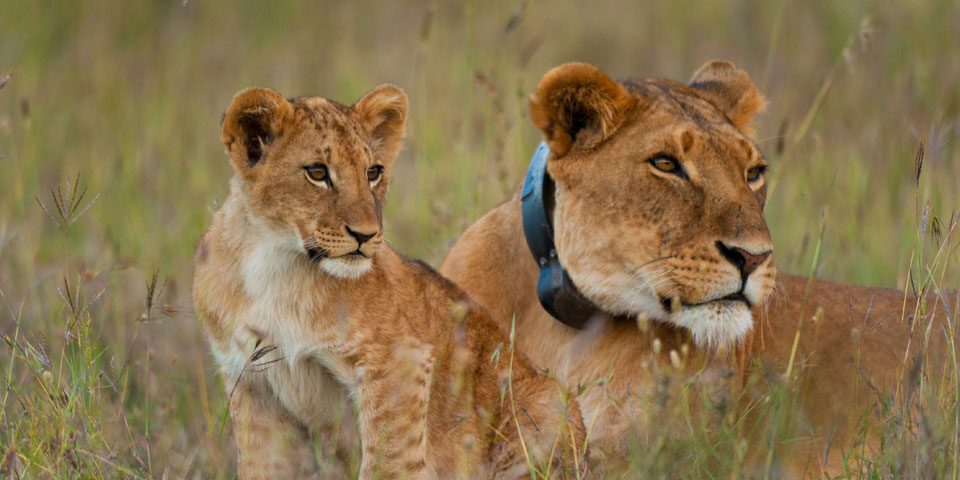
Queen Elizabeth National Park is home to the rare tree-climbing lions, which are one of the more unusual sightings in the park, occurring in the Ishasha Sector, the southern region of the park. While on game drives, you will be encouraged by your guide to scan the fig trees in case you pass any lion up in the branches. For sure, it is not known why the lions climb trees here; some say it is a way of cooling down, and others say it is to gain a better vantage point for spotting their prey or maybe as a way to escape the tsetse flies often buzzing around at ground level.
Birdlife in Queen Elizabeth National Park
Queen Elizabeth National Park is designated as an Important Birding Area (IBA) by Birding International and is one of the most rewarding destinations for bird enthusiasts. The park boasts more than 600 recorded species of birds, which is the largest of any protected area in East Africa.
Additionally, Queen Elizabeth National Park’s location on the DR Congo border means you can spot both East African and Central African species in one location. Notable bird species to see include the lesser flamingo, spotted at Lake Edward, and aquatic bird species around the Kazinga Channel, including the African fish eagle, the African Skimmer and the yellow-billed stork, among others. At the Kyambura Gorge you will see the African finfoot, the blue-headed bee-eater, the martial eagle, and the white-tailed lark, among others.
Things to Do in Queen Elizabeth National Park
Game Viewing
Queen Elizabeth National Park is one of the best wildlife viewing destinations in Uganda, popular for its variety of wildlife, including the Big Five and the rare tree-climbing lions. While out in the Kasenyi Plains of Queen Elizabeth National Park, where most game drives take place, you might see four of the Big Five (with no rhinos), hyenas, hippos and several antelope species.
Also, you can encounter the rare tree-climbing lions in the Ishasha Sector and herds of buffaloes and elephants along the Kazinga Channel.
Bird Watching
For bird enthusiasts, you are in for a grand show in Queen Elizabeth National Park; the park is home to over 600 bird species. With an experienced river guide, you will navigate several trails in the park and spot several bird species including Brown Snake Eagle, Wahlberg’s Eagle, Bateleur, Long-created Eagle, Martial Eagle, Grey Kestrel, African Crake, Black-bellied Bustard, Temminck’s Courser, African Wattled Plover, Crowned Plover, Senegal Plover, Kittlitz’s Plover, Rufous-napped Lark, Flappet Lark, White-tailed Lark, Brown-backed Scrub-Robin, Zitting Cisticola, Croaking Cisticola, Grey-capped Warbler, Black-lored Babbler, Grey-backed Fiscal and Black-headed Gonolek among others
Kazinga Channel Boat Cruise
A boat cruise on Queen Elizabeth National Park’s Kazinga Channel is a relaxing experience on which you get to explore the Kazinga Channel—a waterway connecting Lake George to Lake Edward. As you drift with a local guide, you might see eyes and snouts of hippos poking out of the water. Herds of elephants and buffaloes, zebras and Uganda kobs are often seen lining the banks, quenching their thirst.
Crocodiles and water monitor lizards bask on the banks of the channel, and everywhere you look are colorful water birds such as crested cranes, pelicans, water thick-knees, fish eagles, African skimmer plovers and herons, among others
Chimpanzee Trekking in Kyambura Gorge
Trekking chimpanzees in Kyambura Gorge is one of the exhilarating Uganda safari experiences to do in Queen Elizabeth National Park. On foot, led by armed rangers and guides. You will hike through the forest; Kyambura Gorge has around 20 resident chimpanzees and while sightings are not guaranteed, your guides are very knowledgeable and know the best place to find them. Usually, you can hear the howls of chimpanzees echoing through the trees before you see them.
Once you encounter them, you can spend an hour watching them swing from branches, munching on leaves and grooming each other.
How to Fit Queen Elizabeth National Park into a Uganda Safari Trip
It is easy to go on a safari to Queen Elizabeth National Park before or after tracking mountain gorillas in Bwindi Impenetrable National Park or Mgahinga Gorilla National Park, which is a five-hour drive south. While to the north, Queen Elizabeth National Park adjoins Kibale Forest National Park, creating a corridor for wildlife.
Kibale Forest National Park, the primate capital of the world, is home to the greatest concentration of primates in East Africa and is ranked among the best places for seeing chimpanzees. While on a Uganda safari, you can visit one of the five habituated troops in Kibale Forest on foot led by an experienced guide. As you walk through the rainforest, be on the lookout for endangered red colobus monkeys, golden and blue monkeys, grey-cheeked mangabeys and L’Hoest’s monkeys.
Best Time to Visit Queen Elizabeth National Park
Game viewing in Queen Elizabeth National Park is at its best during the two dry seasons, which are from January to February and from June to July. For birding, visit between late May and September.
June and September are peak tourism seasons in Uganda as well as Queen Elizabeth National Park, with a higher number of visitors in the country’s safari destination. It is recommended you avoid visiting Queen Elizabeth National Park in April, May, August and September, as heavy rainfall can interrupt your safari experience.
Where to Stay in Queen Elizabeth National Park
There are several accommodation options in Queen Elizabeth National Park, ranging from budget to midrange to luxury.
- Mweya Safari Lodge
- Engiri Game Lodge and Campsite
- Kyambura Gorge
- Kasenyi Safari Camp
- Elephant Plains
- Elephant Hab
- Katara Lodge
- Simba Safari Camp
How To Get There
For international visitors, Entebbe International Airport is the main port of entry to Uganda as well as Queen Elizabeth National Park. From here you can use either road or air to get to the park; from Entebbe/Kampala, it is a journey of over six hours to Queen Elizabeth National Park.
The park is also accessible by road from Bwindi Impenetrable National Park, located three to four hours to the south.
By Air – It is a flight of approximately one and a half hours from Entebbe International Airport or Kajjansi Airstrip to one of the three airstrips serving the park, which are Kasese, Mweya or Ishasha Airstrip.