Common Myths About the Great Wildebeest Migration
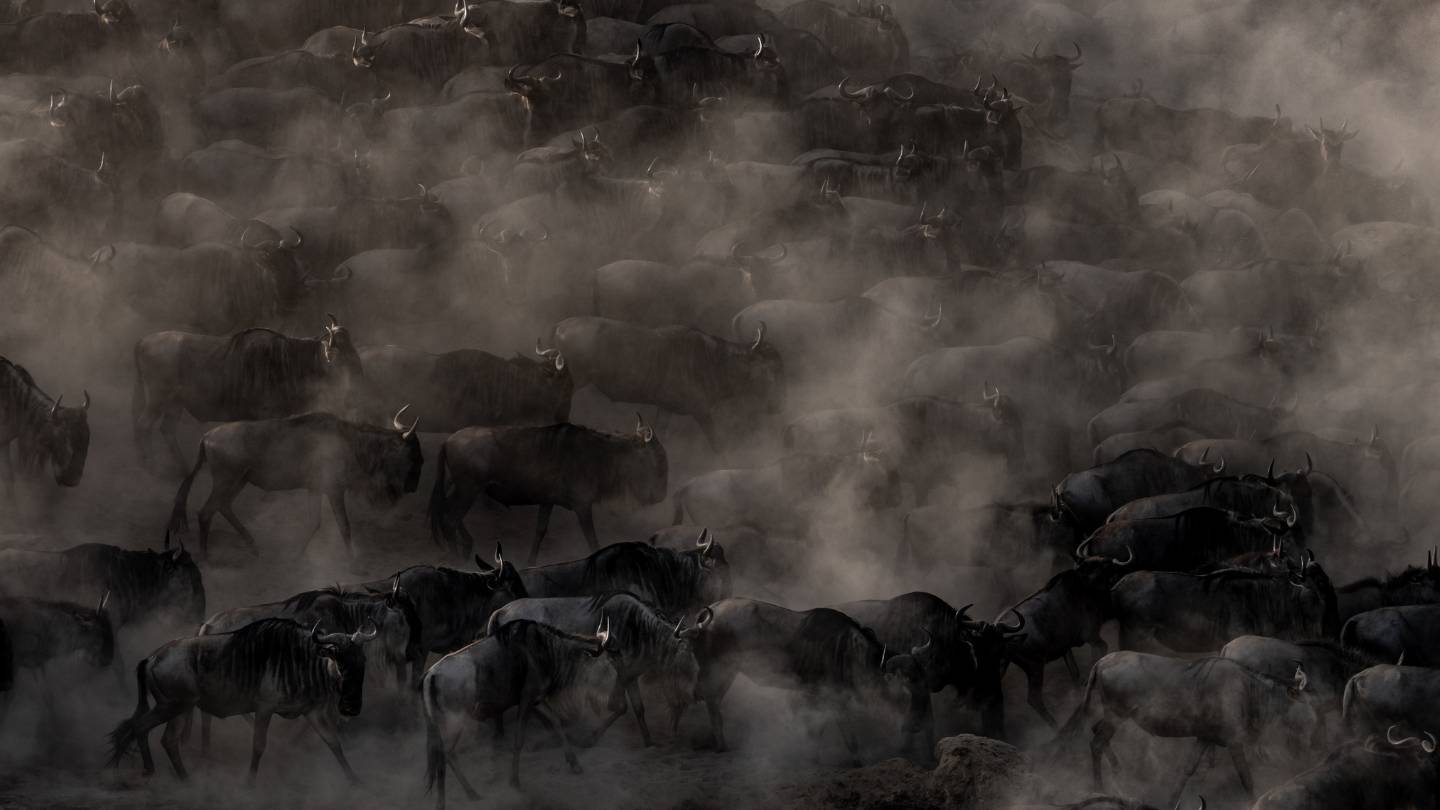
Often described as one of nature’s most awe-inspiring events and rightfully so, the Great Wildebeests Migration is a natural wonder with over 1.5 million wildebeests accompanied by hundreds and hundreds of zebras and gazelles, make a continuous clockwise journey between Tanzania’s Serengeti and Kenya’s Masai Mara National Reserve in search of fresh grazing grounds.
The Great Wildebeest Migration is one of the largest land mammal migrations in the world (in fact the season) and is one of the Seven Natural Wonders of Africa. It is a true spectacle of nature, with millions of wildebeests, zebras and gazelles thundering across the endless plains of the Serengeti throughout the year in search of fresh grazing and higher – quality water. For many travelers, the epic crossing of the Grumeti and Mara River is the ultimate highlight of any African safari.
-
Migration only happens in July and August
The famous Mara River Crossing does happen between July and August. In this stage of the Great Wildebeest Migration, wildebeests’ brave strong currents and crocodile – infested waters, typically occurring around July and August. But that is just one part of the journey as the Great Wildebeest Migration is a year – round cycle.
From the calving season in Ndutu Plans (January – March) to the Grumeti River Crossings (May – June) and the slow southward return (October – December), there is always something happening when it comes to the Great Wildebeest Migration.
If you would like to avoid crowds, we recommend visiting outside of the peak months.
-
Wildebeests just “follow the rain”
While the movement of wildebeests is triggered by rain which influences the growth of grass and water availability. Wildebeest Migration is more than just chasing the rain. Scientists have found that wildebeests are guided by an internal compass, possibly a mix of instinct, scent, and learned behavior, that determines when and where they move.
For decades, the migration route has remained relatively unchanged and even in years of unpredictable rain patterns.
-
The Migration is a solo wildebeest event
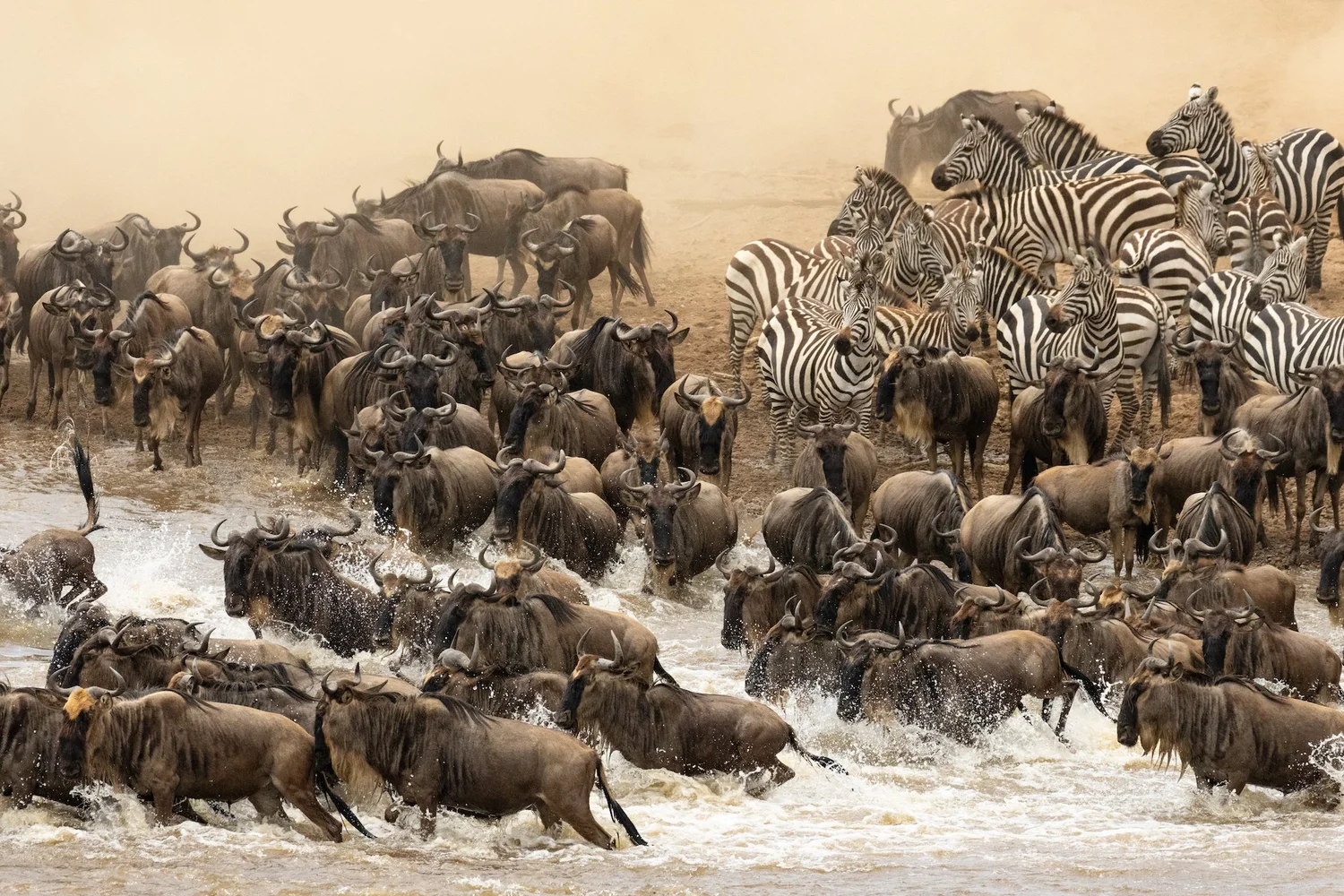
Though the wildebeests get all the attention, they are not alone. Zebras and Thomson gazelles are part of this annual journey. Often, zebras lead the way thanks to their sharp memory of paths and water sources, while gazelles bring up the rear.
The Great Wildebeest Migration is a multi- species survival strategy, not a wildebeest – only affair.
-
You Can see the Migration from anywhere in the Serengeti
The Serengeti is vast stretching about nearly 15,000 square kilometers. Depending on the month, the migrating herds may be concentrated in specific regions of the park that is south in Ndutu, west near Grumeti, or north close to the Mara River.
Planning your Great Wildebeest Migration Safari without checking the movement of the herds only leads to disappointment.
Talk to one of our Travel Experts to work on planning your safari together and check all needed information and how to plan a perfect Great Wildebeest Migration Safari.
-
Migration is a smooth predictable Journey
Far from the might, the Great Wildebeest Migration is a messy, chaotic, and unpredictable journey. Herds do split, merge, and take different routes. At river crossings, some cross early and others later and sometimes, due to shifting weather, herds may linger or move faster than usual.
It is all nature’s doing what it does best, that is moving on its terms.
The best way to understand the Great Wildebeest Migration is to witness it in real time. Whether you are interested in witnessing the heart – stopping river crossings or the birth of millions of calving in the calving season, there is a journey waiting for you.
In conclusion” The Great Wildebeest Migration is one of the “Seven Natural Wonders of Africa”, this awe-inspiring movement of wildlife is not something to avoid when planning your safari trip to Tanzania and Kenya. It is a once-in-a-lifetime experience that will be with you forever, and a spectacle that doesn’t disappoint.
If you are looking for a migration safari, look no further than Sambu Africa Safaris. With our years of experience organizing safaris and tours throughout Kenya and Tanzania, providing our clients with everything Kenya and Tanzania has to follow.
Checkout our Wildebeest Migration Safari Tours.
