Masai Mara National Reserve and the Great Rift Valley offer two distinct ways to experience Kenya. In Masai Mara, game drives follow wildlife across open grasslands, marsh and riverine forest, with conditions changing through the year. Around the stunning Lake Naivasha, travelers can spend more time walking, birding and exploring the lake, without planning a safari around one main wildlife event.
Choosing between Masai Mara and the Great Rift Valley depends on how important the migration is to your trip and how you want spend your time on Kenya safari. Many travelers combine the two, moving from the game – drive led days of the Mara to walking, birding and time on the lake in the Great Rift Valley.
Understanding Kenya’s Two Distinct Safari Regions
Much of Masai Mara is covered by open grassland, broken by riverine forest, marsh and seasonal watercourses. Wildlife remains in the reserve throughout the year, although rainfall, grazing conditions and the arrival of migratory hers can change where animals gather and how easily they are seen.
Lake Naivasha is surrounded by woodland, open ground and working farmland, while water birds and hippos are often seen along the shoreline. Days in Lake Nakuru include birding, boat trips, guided walks and visits to nearby areas such as Crescent Island.
Masai Mara National Reserve has a more defined wildlife calendar, while Lake Naivasha offers greater flexibility to visitors when their travel dates are fixed.
When to Visit the Masai Mara for the Best Wildlife Viewing
The best time to visit the Masai Mara depends on whether your priority is the Wildebeest Migration, birding, predator viewing or a less period in the reserve and predator viewing.
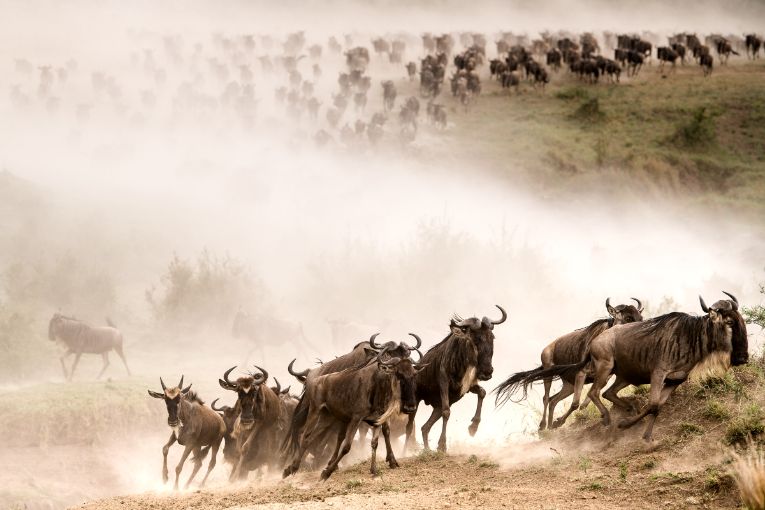
From July to October, the dry season usually brings shorter grass, less surface water and large numbers of wildebeests and zebra into the wider Mara ecosystem. During this period, river crossings can occur, although their timing and location cannot be predicted. Herd movements depend on rainfall and grazing conditions across the Serengeti – Mara ecosystem, and several days may pass without a crossing.
Large concentrations of herbivores can attract predators and scavengers, while known crossing points may become busy.
- Also, January to March offer rewarding wildlife sightings. Drier conditions often leave more open views across the grasslands, while resident animals continue to gather around rivers, marshes, and remaining water source. These months may suit travelers interested in predator activity without planning the trip around the migration.
- April, May and parts of June are associated with the long rains, although rainfall varies from year to year. Masai Mara becomes greener, some roads can be more difficult, and taller vegetation may make certain animals harder to see at a distance, and taller vegetation may make certain animals harder to see at a distance,. Fresh grazing spreads wildlife across the reserve, while migration birds may still be present early in the season and newborn animals can attract predators.
- November and December usually bring shorter rains, fresh grass and changes in wildlife distribution. Resident animals remain in the reserve, while driving conditions depend on the timing and extent of the rain. As a traveler, comparing seasons should look beyond a simple wet – Vs dry distinction, as rainfall can influence game sightings by changing water availability, vegetation and wildlife movement across the reserve.
When to Visit the Great Rift Valley and Lake Naivasha
The Great Rift Valley around Lake Naivasha can be visited all year – round. The lake and surrounding habitats supports activities in every season, although rainfall, bird movements and water levels can influence conditions from day to day.
The dry months that is from January to March and July to October, are often convenient for walking and day trips. Generally, paths are firmer, and outdoor plans are less likely to be interrupted by rain. Mornings and evenings can be cool, particularly around July and August, so warm layers are useful for early starts and boat trips.
The arrival of the rain refreshes the vegetation around the lake and can increase bird activity in gardens, woodland and shoreline habitats. Showers may alter the timing of a walk or a boat trip, but flexible planning usually leaves room for a full day of activities.
One of the main reasons to spend time in the Great Rift Valley is birding. Lake Naivasha attracts cormorants, pelicans and many small species around the water and surrounding vegetation. Seasonal migrants add variety at certain time of year, alongside the many resident birds seen around the lake.
Boat trips on Lake Naivasha offer incredible views of fish eagles, kingfishers, herons and hippos along the lake, while guided walks on Crescent Island takes you through open ground where giraffes, zebras and waterbucks are often seen.
Masai Mara Vs Great Rift Valley: Key Seasonal Differences
Your Masai Mara safari season is greatly influenced by season. The Great Migration brings many travelers between July and October, while rainfall can affect visibility, road access and where animals gather across the reserve.
Lake Naivasha is less closely tied to one annual wildlife event. Rain may alter the timing of a walk or boat trip, but birding and lakeshore wildlife viewing remain possible through much of the year.
Usually, game drives from the main part of Masai Mara. Around Lake Naivasha, travelers can divided their time between the lake, guided lakes and the grounds around your safari lodge or camp.
Here is a seasonal guide to help narrow the choice
- July to October – Best for travelers who have the Great Migration on top of their list and accept that some areas may be busy.
- January to March – Suits travelers interested in dry season wildlife viewing in the Mara and clear conditions
- April to June – Best for photographers, birds and returning safari goers who are comfortable with rain and changing road conditions
- November and December – Best for combing fresh vegetation with resident wildlife viewing in both regions, although rainfall remains variable.
These are planning guidelines rather than fixed rules. Weather patterns do not follow identical dates each year, and wildlife responds to conditions across a much wider area than any one camp or reserve.
Why the Great Rift Valley Works Year – Round
Lake Naivasha is accessible all through the seasons because each day can be adapted to the conditions. A shower may delay a walk or boat trip without disrupting the rest of the stay.
Guests on Lake Naivasha safari can watch birds in the shores of the lake, take a boat trip in the lake, walk on Crescent Island or explore further into the surrounding region. This can suit families and multi-generation groups, as activities can be planned around different ages and energy levels. Drier months generally make walking easier, while wetter periods bring fuller vegetation and changes in bird activity.
Combining Both Regions in One Kenya Safari Itinerary
Lake Naivasha can come before Masai Mara, giving travelers time to settle into the journey and become familiar with Kenya’s birdlife. Also, it can follow the Mara, when walking and boat trips provide a chance from consecutive game drives.
Our Kenya Safari Itineraries brings the regions together making it possible to combine these incredible safari destination.
For a first safari, spend four or five nights in the Mara, followed by two or three nights at Lake Naivasha providing a balanced introduction. For travelers with more time can stay longer in each destination, particularly if they want to include day trips or specialist birding.
Plan Your Kenya Safari with Sambu Africa Safaris
The right dates depend on whether you want to plan around the Great Migration, spend most of the trip on game drives or include more walking, birding and time on the water. Speak to the reservations team about your preferred dates, the wildlife you hope to see and how you would like to divide your time between the two regions.
