The Wildebeest Migration in July
What to Expect in July
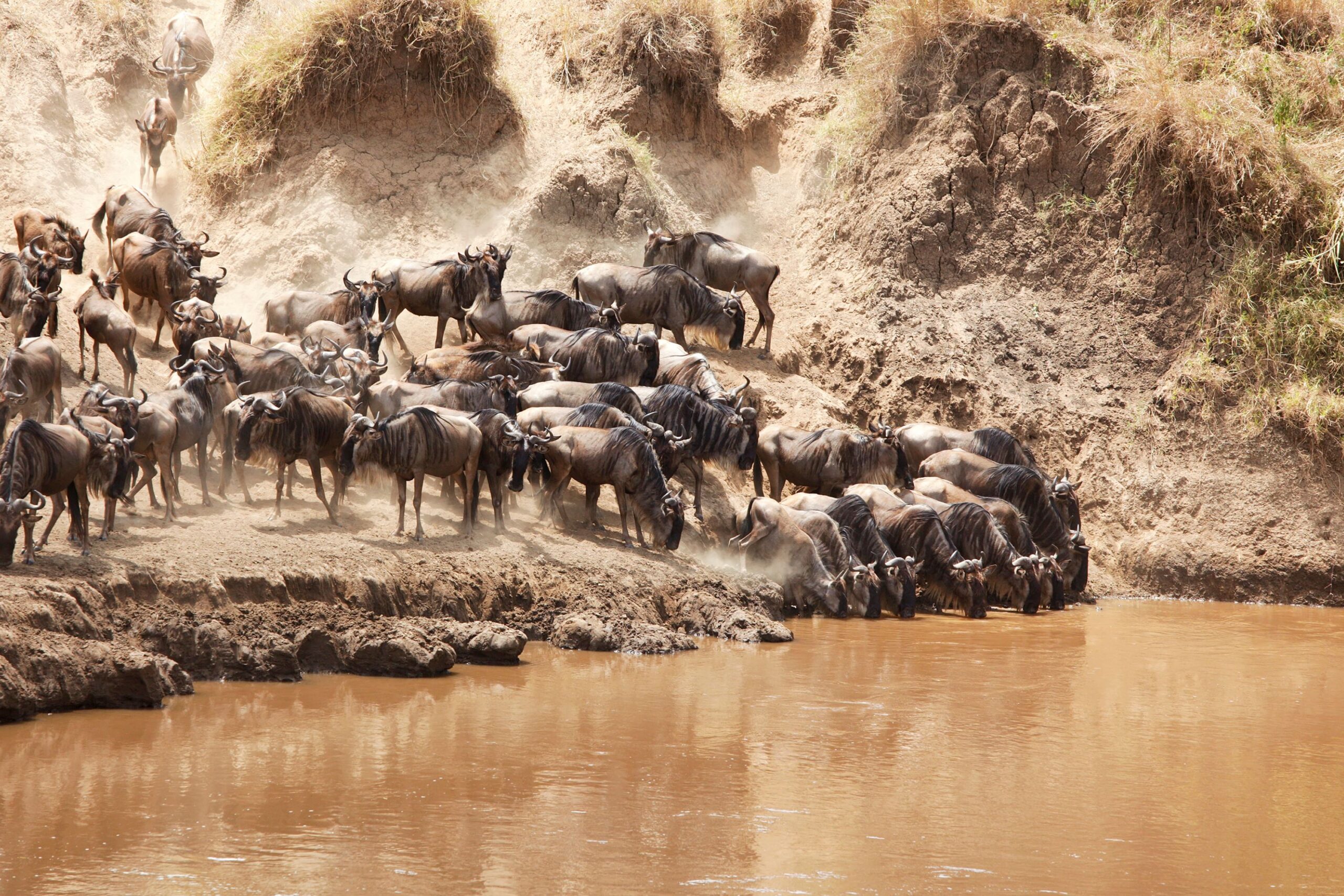
A deep grunt resonates across the still dawn, drawing you awake from slumber. The air is filled with excitement and you can feel it.
The ground rumbles and the dust rises. It is time, and the wildebeests are on the move, heading northwards to the west grass of the Masai Mara. Today, perhaps, the river crossings begin.
It is mistakenly thought that the Wildebeest Migration in East Africa – one of the Africa’s greatest migrations, only takes place between July and October which is not true as the animals are constantly moving in a massive clockwise direction across the Serengeti – Mara ecosystem.
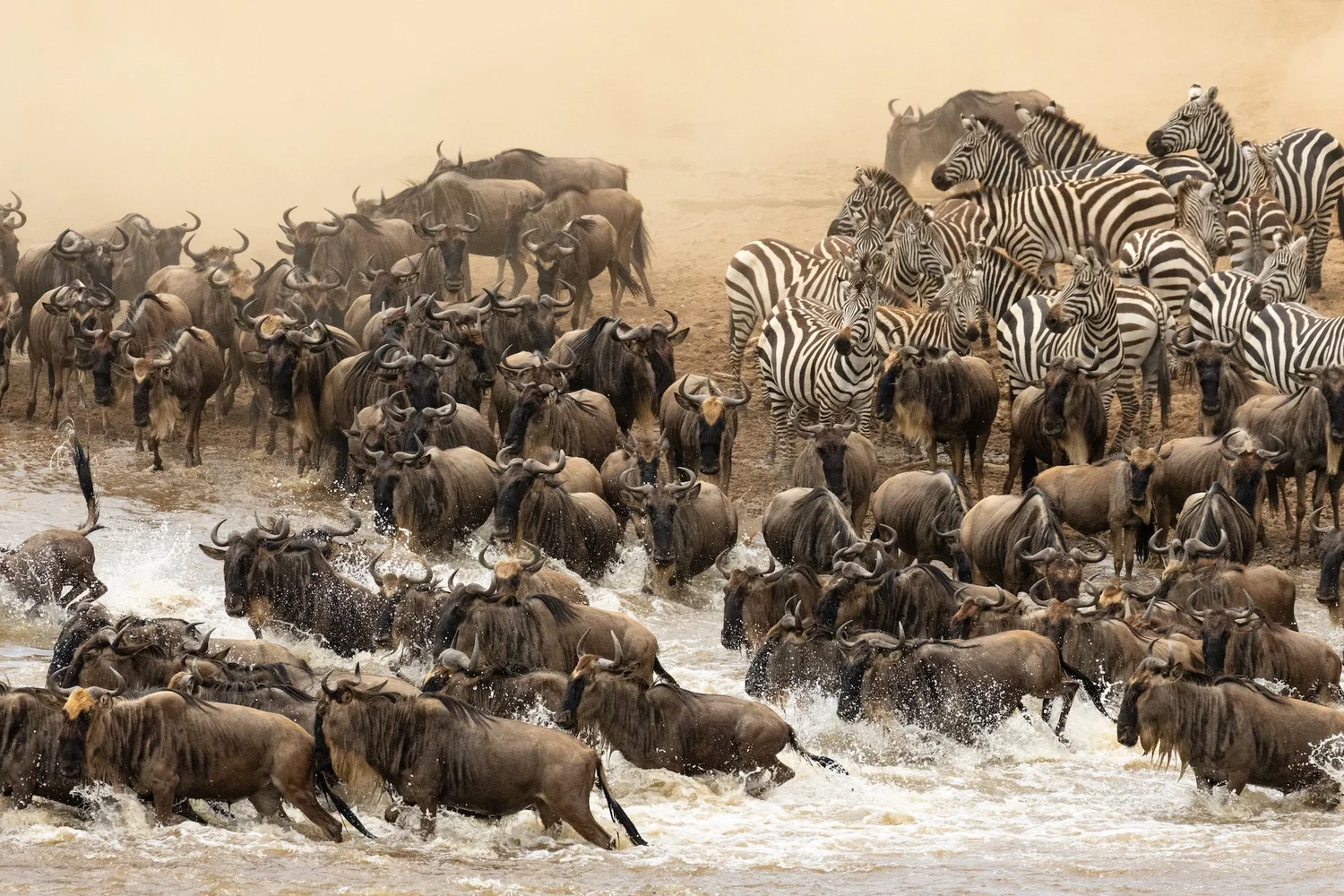
The River Crossings are the most popular for their visceral power and occur during the peak safari season in Africa (June to October).
It is impossible to predict exactly when the animals will move or when the rivers will be crossed. Only the rain knows. The wildebeests watch for the ancient sights only they can rea, while you watch them navigate their way through the Mara – Serengeti Ecosystem.
What to Expect on A Great Migration Safari In July
- Wildebeest Migration Movement: In pursuit of water and greener grass, herds of wildebeest begin to migrate with great urgency.
- Predatory Encounters: Expect predatory encounters, such as with crocodiles, lions, leopards and hyenas follow the herd closely – riverbanks become prime hunting grounds.
- River Crossings: Wildebeest herds primarily face the mighty Mara River in the northern Serengeti.
- Accommodations: Stay in northern Serengeti. July is a popular time to visit and there are a limited number of rooms, so we strongly recommend that you book a year in advance to avoid disappointment.
- Crowds and logistics: July is peak season. Flights between Serengeti and Mara make travel seamless, while private mobile camps offer front – row access to the Great Migration.
Whether in July
July is dry and clear, with daytime highs around 25°C (77°F) and cooler mornings of 14°C (57°F). Expect crisp air, blue skies, and excellent light for photography.
What is The Great Migration?
The Great Migration is a non – stop, year – round movement of more than one million animals (mostly wildebeests, but also zebras, gazelles and antelopes, followed by predators) across the Serengeti – Mara ecosystem of Tanzania and Kenya.
The movement of the Great Migration is triggered by the rains, prompting the animals to follow their ancient route in search of fresh grazing and water. It is an epic journey of about 1,800 km, across the Masai Mara plains in Kenya, south into Tanzania’s Serengeti and the edge of the Ngorongoro Crater, before circling up and back again in a clockwise direction.
Why July Is One of the Best Times to See the Great Migration
If you are wondering about the best time to see the Great Migration, July stands out. It combines perfect safari weather with one of Africa’s most iconic wildlife spectacles.
For photographers and first – time visitors alike, July delivers unforgettable drama – crossings, chases, and vast landscapes bathed in golden light.
July is one of the most dramatic months of the Great Migration. The herds are moving north from Tanzania’s western Serengeti towards Kenya’s Masai Mara. It is the dry season here, and water sources are shrinking fast.
The herds – wildebeests, zebras and gazelles move instinctively towards the promises of greener pastures, setting the stage for some of the most intense wildlife encounters on earth.
Where The Herds Are In July
By early July, the wildebeest herds are spread across the Grumeti Reserve and northern Serengeti. As they push north, the pace quickens, dust rising beneath their hooves, predators waiting at every turn.
This is when the first river crossings begin. The Grumeti River still holds some water, while the Mara River in the north becomes the ultimate obstacle. The sight of thousands of wildebeests plunging into crocodile – filled waters is both breathtaking and humbling, raw and powerful.
Quick Guide
Where are the Wildebeest in July?
In July, the herds primarily face the mighty Mara River in the northern Serengeti. While the Grumeti River crossings (further south), typically happens in June, some herds may still be seen near its banks early in July.
Is July a good time to visit Africa for the Great Migration?
Yes, July is one of the best times to see the Great, offering thrilling river crossings, excellent weather and clear game viewing conditions.
What is the weather like in the Serengeti in July?
In July, expect cool, dry mornings around 13°C and pleasant afternoons reaching 25°C. During this time of year, rain is rare making it ideal for safari drives and photography.
How far in advance should I book for July safaris?
Because July is peak season, lodges and camps near the Grumeti and northern Serengeti fill up months in advance. We recommend securing your Great Migration Safari a year in advance.
Can I combine Serengeti and Masai Mara in one trip?
Absolutely. Many travelers choose to experience both regions, following the migration across border.
Planning Your Journey
If you are researching the best time to visit Africa for migration, July is ideal for northern Tanzania and Southern Kenya. You can combine a Serengeti Migration safari with time in the Masai Mara for the full experience.
Our Africa-based safari experts can design a bespoke itinerary around river crossings, private camps, and expert guiding, ensuring you witness the migration at its most powerful.
Inspired to start planning your July Great Migration Safari? Browser our tours or let our Africa safari experts craft an itinerary just for you.